near Beomgye Station: clinic tips, Coretox & follow-up
- 공유 링크 만들기
- X
- 이메일
- 기타 앱
Direct answer summary
If you are searching for Pyeongchon Botox near Beomgye Station, you will find clinics that provide wrinkle injections and jawline contouring using botulinum toxin, including domestic products such as Coretox. Results are temporary and vary by person, so it is important to understand how Botox works, what areas can be treated, what to ask during consultation, and what kind of clinic environment may suit overseas patients visiting the Pyeongchon area.
This article offers general information only and does not guarantee any particular result. A personal consultation with a qualified doctor is always necessary before deciding on treatment.
Overview of Botox treatment in Pyeongchon
The toxin temporarily reduces the muscle’s ability to contract. As a result, expression lines can look softer, and in areas with strong muscles, the overall volume can appear reduced.
In the Pyeongchon area of Dongan-gu, Anyang, near Beomgye Station on Line 4, some clinics offer Botox for both facial wrinkles and contouring. Many international patients look for options that use domestic toxin products such as Coretox, and that can be combined with lifting or skin laser treatments during a short visit to Korea.
Because the effect is not permanent, Botox is often used as part of an ongoing anti-aging or facial contouring plan rather than a one-time solution. The exact plan, dose, and treated areas should be decided after a detailed consultation.
How Botox works and common treatment areas
How Botox works in simple terms
Botulinum toxin works at the junction between nerves and muscles. It interferes with the signal that tells the muscle to contract. When the muscle relaxes, the skin above it can look smoother and less creased.
Dynamic wrinkles, which appear when you frown, smile, or raise your eyebrows, are the main target. Over time, these repeated movements can create fixed lines even at rest. By reducing the strength of the movement, Botox can help soften existing lines and slow the deepening of new ones.
The effect is temporary. Nerve endings gradually recover, and muscle activity returns over several months. Because of this, many people choose to repeat treatment at intervals if they are satisfied with the previous outcome.
Typical facial treatment areas
In Pyeongchon, as in many urban areas of Korea, common Botox treatment areas include:
Forehead lines
Horizontal lines that appear when you raise your eyebrows can be softened by carefully relaxing the forehead muscles. The dose and placement need to be adjusted to avoid an overly heavy feeling.
Glabella (frown lines)
Vertical lines between the eyebrows, sometimes called “11 lines,” form when you frown or concentrate. Botox in this area aims to reduce the strong inward pull of the muscles, which can make the expression look less tense.
Crow’s feet
Fine lines at the outer corners of the eyes deepen when you smile or squint. Small doses of Botox can help these lines appear less sharp, while still allowing natural smiling when done conservatively.
Bunny lines and lower-face lines
Short diagonal lines on the sides of the nose (bunny lines) can be treated with tiny injections. Around the mouth, Botox may be used for:
• Downturned mouth corners caused by overactive depressor muscles
• Chin dimpling or “orange peel” texture
Because this area is important for speaking and eating, dosing and placement must be especially careful.
Jawline slimming with masseter Botox
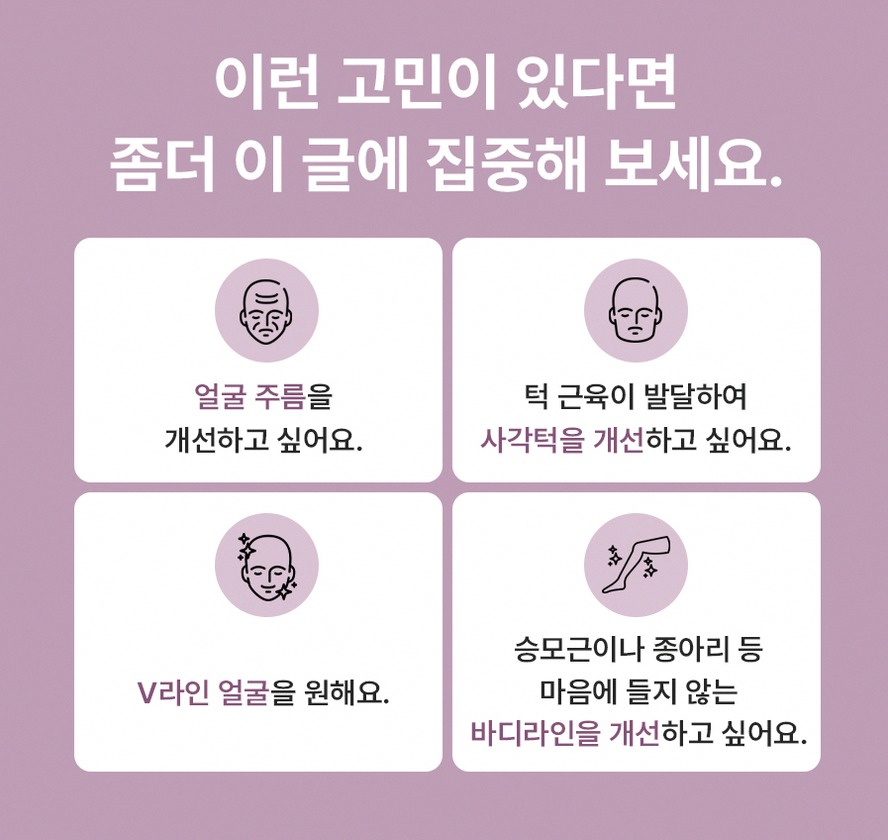
Masseter Botox is popular among people who feel their lower face looks wide or square because of strong chewing muscles. By injecting botulinum toxin into the masseter muscles on both sides of the jaw, the muscle activity can be reduced. Over time, the muscle can become less bulky, which may create a softer jawline.
This approach is non-surgical and usually has minimal downtime, which can suit overseas visitors. However, the degree of visible slimming depends on how thick the muscle is, how much is due to bone structure, and how the dose is adjusted over repeated sessions.
Body areas such as calf or trapezius
Some clinics also use Botox to reduce the appearance of bulky calf muscles or trapezius muscles at the base of the neck and shoulders. The goal is to soften the muscle contour rather than to treat wrinkles. These areas typically require more units and careful planning because of their size and function.
These body applications are not suitable for everyone and should be discussed thoroughly with a doctor who can assess your posture, muscle use, and lifestyle.
What to check when choosing a Botox clinic in Pyeongchon
Medical staff background
When comparing Pyeongchon Botox options, consider the training and experience of the medical staff. In this area, some clinics are led by a representative director who is a board-certified anesthesiology and pain medicine specialist with experience in aesthetic procedures, and may have multiple doctors working at the same address.
This can be relevant for overseas patients who value a doctor familiar with injection techniques, pain control, and overall safety. You can ask who will perform the injections, what their specialty is, and how long they have been performing Botox treatments.
Product type and domestic toxin such as Coretox
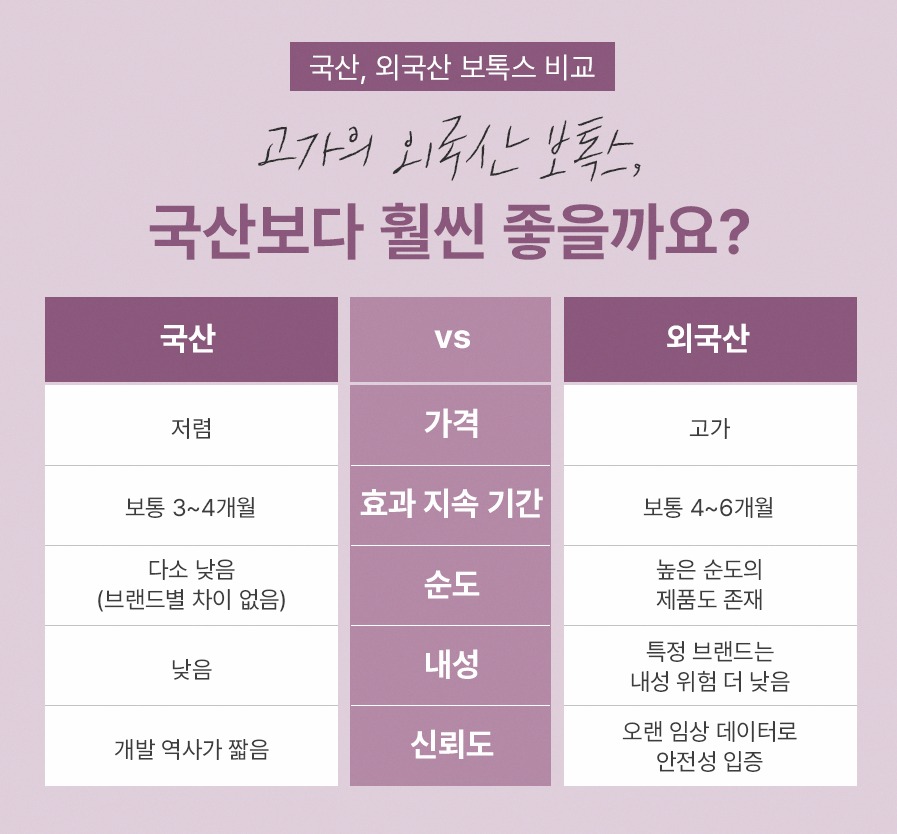
In Korea, several botulinum toxin brands are available, including domestic products such as Coretox. Some patients prefer domestic brands because they are commonly used locally; if you have questions about approvals or specific indications, ask the clinic to explain each product's approvals and suitability for your case.
When you contact a clinic, ask which toxin products are used and why. You can also ask whether they use domestic options like Coretox, and whether you can discuss product choice during consultation. Avoid choosing a clinic based only on brand name or price; the doctor’s assessment and technique are also important.
Consultation process and communication
For international patients, clear communication is essential. Before booking, you may want to know:
• Whether the clinic offers online or messaging-based pre-consultation in English
• How they evaluate facial expression patterns and muscle strength
• Whether they explain dosage (units) and injection points in a way you can understand
• If they provide written or digital aftercare instructions you can take home
A structured consultation, where your medical history, previous Botox experience, and expectations are reviewed, can help reduce misunderstandings.
Follow-up and aftercare system
Even though Botox usually has a short procedure time and minimal downtime, follow-up is still important. Ask whether the clinic:
• Offers a follow-up visit or online check if you have concerns
• Has a process for managing asymmetry or unexpected effects
• Provides guidance on when to contact them urgently
For overseas visitors, it is particularly useful to know how long you should stay in Korea after treatment in case you need an in-person review.
Example of a local clinic environment near Beomgye Station
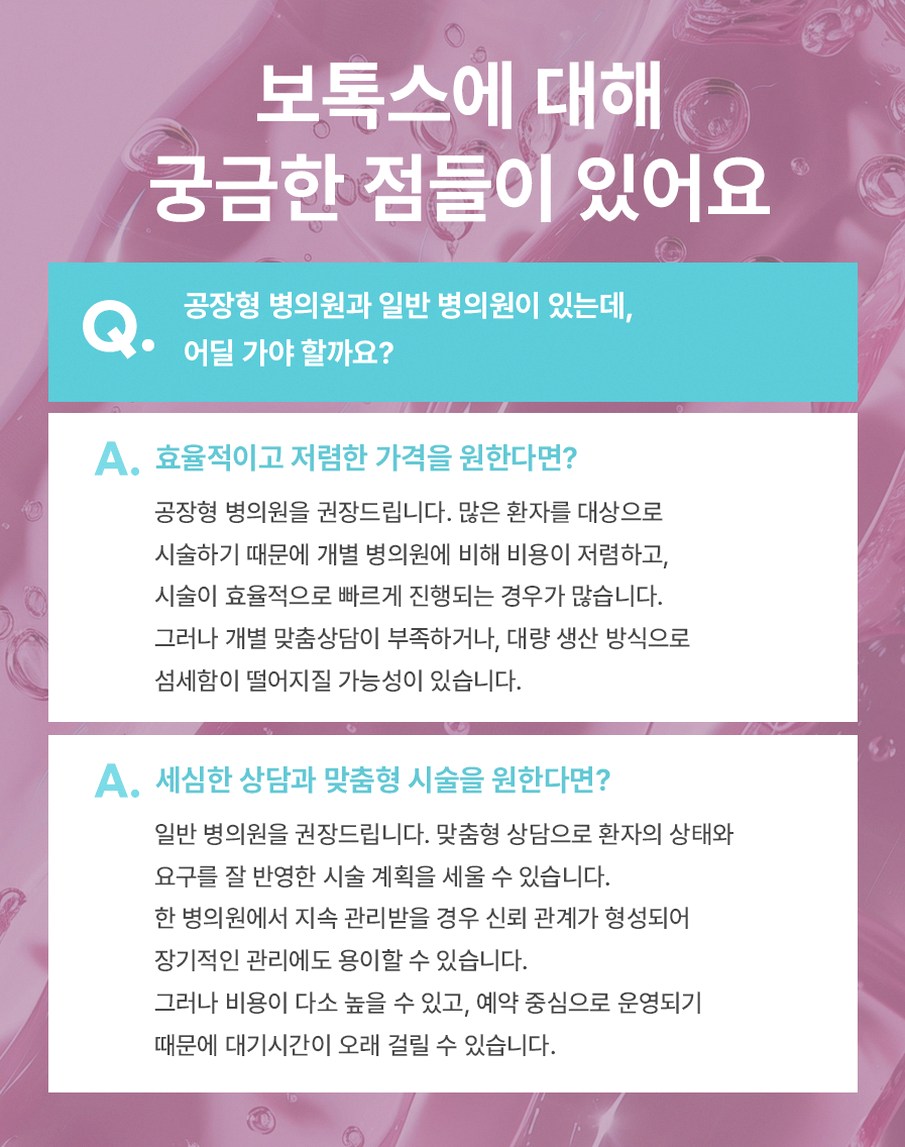
In the Pyeongchon area of Dongan-gu, Anyang, within walking distance (about 160 meters) of Beomgye Station on Line 4, you can find clinics in commercial buildings such as the Anyang Trade Center, often on upper floors like the second floor. These locations can be convenient for commuters or travelers staying nearby.
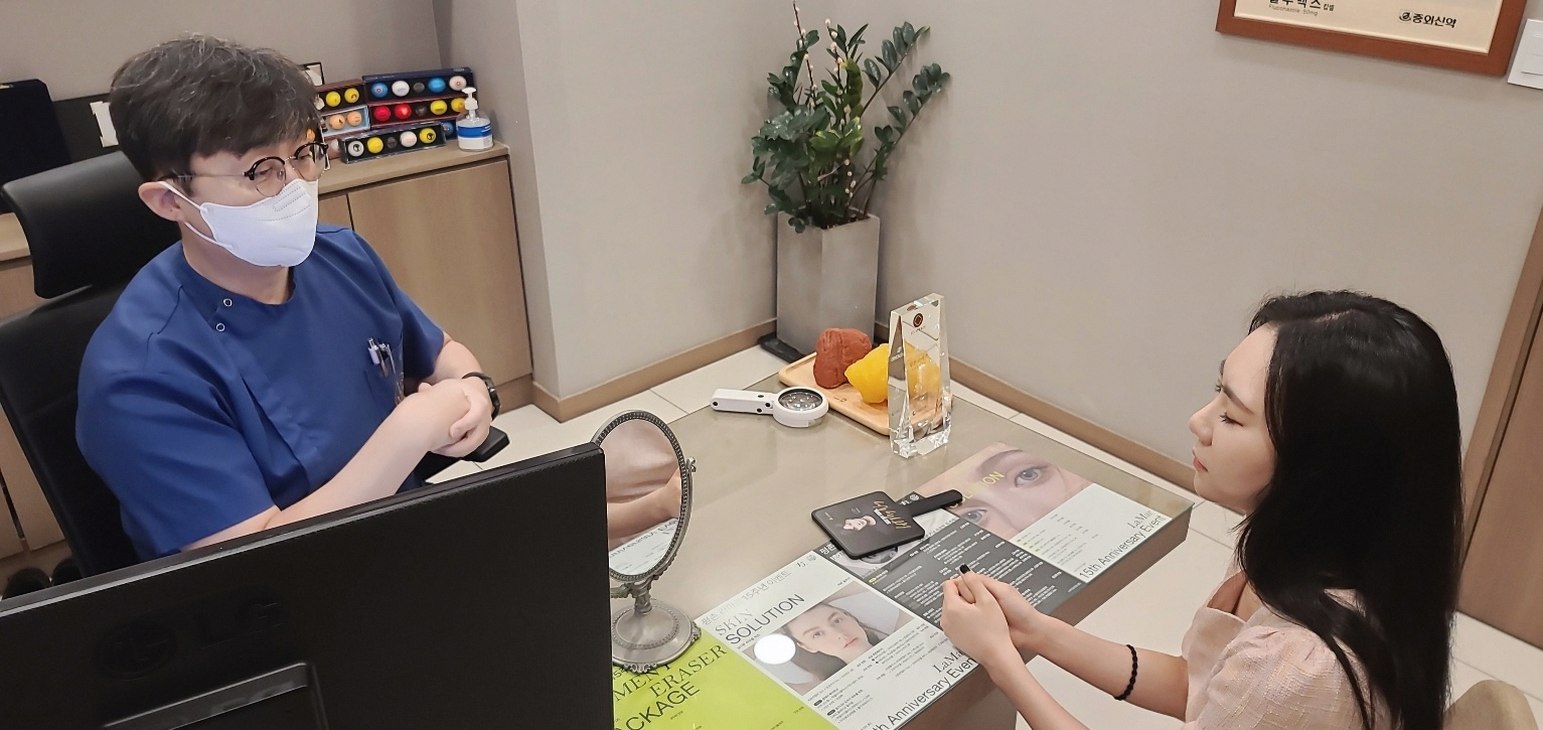
Lamar Premier Clinic is an example of a clinic in this area that offers Botox alongside a broad lineup of lifting and anti-aging treatments. The clinic environment can help illustrate what you might expect in Pyeongchon.
Wide range of lifting and skin devices
Some clinics in this area provide more than 14 types of skin and laser devices. Treatments may include options such as Ulthera Prime, XERF lifting, InMode, thread lifting, and various laser lifting procedures, as well as skin lasers and body contouring.
For patients, this means that Botox does not have to be a stand-alone procedure. After diagnosis, doctors may suggest combining Botox with other treatments, such as:
• Laser lifting for skin tightening
• Skin toning lasers for pigmentation or redness
• Skin boosters or hydrating treatments for texture
This kind of combination is not necessary for everyone, but it can be an option if your concerns include both wrinkles and skin quality.
Event and package-centered programs
Clinics in Pyeongchon sometimes organize event-based or package programs, such as starter packs, one-day programs, or seasonal events. These can group together Botox with lifting or skin care sessions.
If you are visiting from overseas, you can ask whether there is a one-day or short-course program that fits your travel schedule, and what is included in each package. Clarify whether consultation, treatment, and aftercare products are part of the package, and whether any follow-up can be done online after you return home.
Preference for natural-looking results
Some representative doctors in this area state that they aim for natural-looking changes rather than dramatic or overdone effects. In practice, this often means conservative dosing at first, careful design of injection points, and willingness to adjust in later sessions if needed.
If you prefer a subtle result, mention this clearly during consultation. Bring reference photos of your own face at a younger age rather than heavily edited images of others. This can help the doctor understand the degree of change you are comfortable with.
Procedure steps, expected timeline, and aftercare
Typical Botox procedure steps
While each clinic has its own protocol, a typical Botox visit in Pyeongchon may follow this general flow:
- Consultation and assessment
- The doctor reviews your medical history, current medications, and previous Botox or filler treatments. They examine your face at rest and in motion, checking how strongly each muscle contracts and where wrinkles form.
- Cleansing and basic preparation
- The treatment area is cleansed to reduce the risk of infection. Makeup is usually removed from the injection zones. In some cases, a topical numbing cream or ice pack may be applied for comfort.
- Marking injection points
- The doctor may mark small points on the skin to guide where each injection will go. This is especially important for areas like the forehead and jawline, where precise placement helps avoid unwanted heaviness.
- Injections
- Using a very fine needle, the doctor injects small amounts of botulinum toxin into the targeted muscles. You may feel brief stinging or pressure. The number of injections depends on the area and design.
- Short observation and finishing
- After the injections, you may rest for a short time. The staff may apply a soothing pack or gentle pressure to reduce redness. You are usually able to leave the clinic soon after.
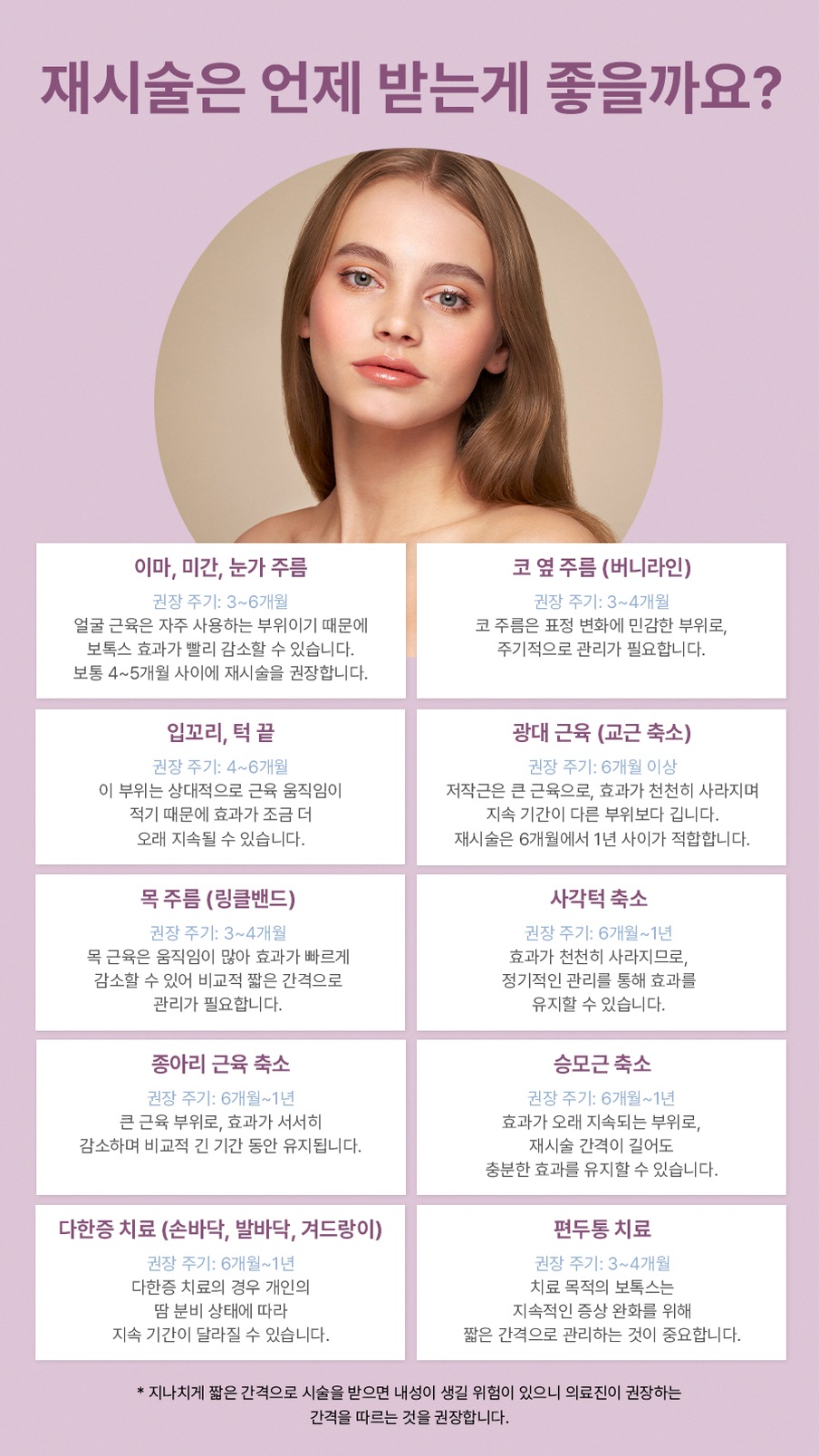
Onset and duration of effect
The effect of Botox does not appear immediately. A typical timeline is:
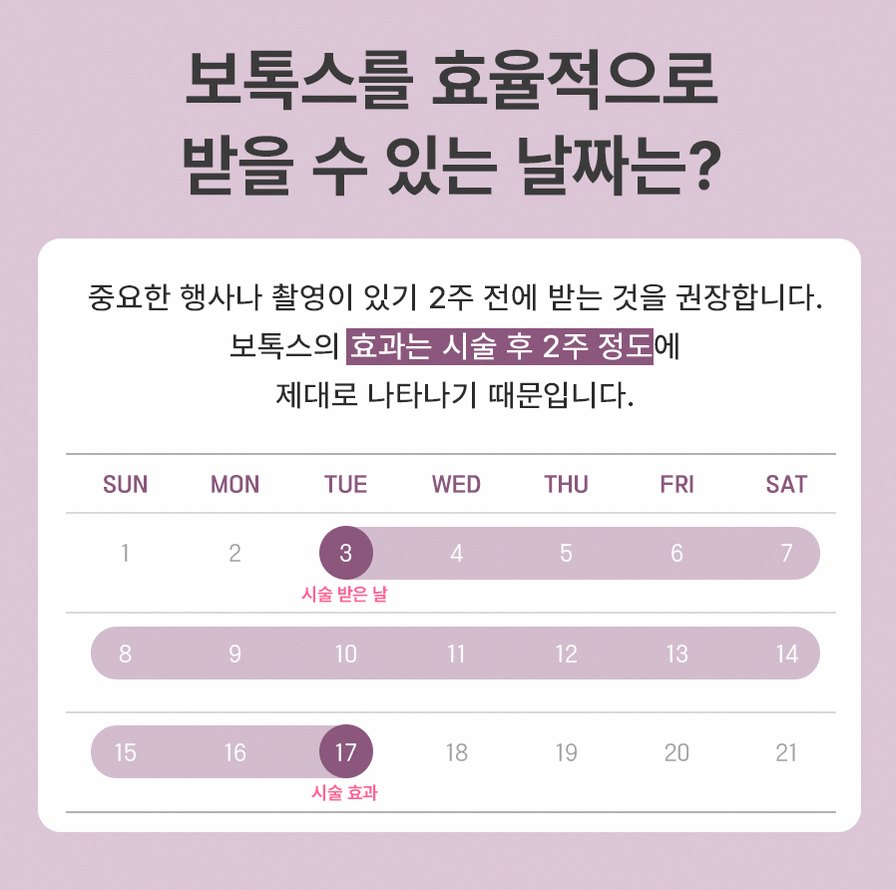
• Within a few days: You may start to notice reduced movement in the treated muscles.
• Around 1 to 2 weeks: The effect usually reaches its peak.
• Several months: The effect gradually wears off as nerve signals recover.
Some patients schedule repeat treatments at intervals determined on a case-by-case basis. Frequency varies widely, and some people may need less frequent sessions after multiple treatments. Your doctor can recommend a personalized schedule based on your response and goals, but no exact interval can be guaranteed.
Aftercare tips for overseas patients
After Botox, general advice often includes:
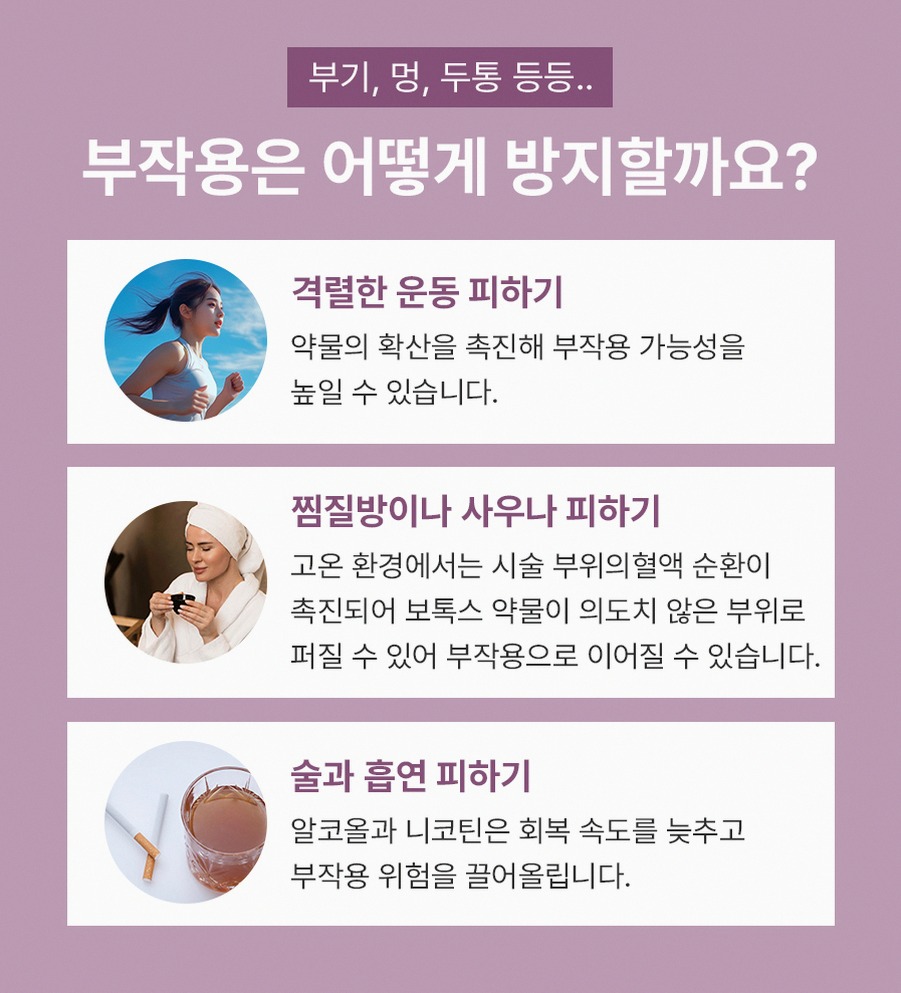
• Avoid rubbing or massaging the treated area for a certain period (often several hours) to reduce the chance of unwanted spread.
• Try not to lie flat or bend deeply for a few hours if your doctor advises this.
• Postpone very intense exercise or sauna use on the same day, depending on the clinic’s guidance.
• Do not schedule other facial procedures without checking with your doctor first.
Mild redness, small bumps, or bruising at injection sites can happen and usually improve over a few days. If you notice strong pain, severe swelling, difficulty speaking or swallowing, or other unusual symptoms, contact the clinic or seek medical attention promptly.
Who may consider Pyeongchon Botox
Typical indications
People who might consider Botox in the Pyeongchon area include those who:
• Are bothered by expression wrinkles on the forehead, between the eyebrows, or around the eyes
• Notice early signs of aging and want a non-surgical option
• Have a strong jaw muscle and want a slimmer-looking lower face without surgery
• Feel their calf or trapezius muscles look bulky and are interested in muscle-volume reduction
These goals need to be balanced with your natural facial expressions, work requirements, and personal style.
Who should be cautious
Certain individuals should be especially cautious and must discuss their situation thoroughly with a doctor before deciding on Botox. This includes people who:
• Have neuromuscular disorders
• Are pregnant, planning pregnancy soon, or breastfeeding
• Take specific medications that may interact with botulinum toxin
• Have a history of allergies or previous adverse reactions to Botox or similar products
In some cases, the doctor may advise against treatment or suggest delaying it.
Online consultation and pre-visit preparation
Preparing from overseas
If you plan to travel to Pyeongchon for Botox, it is helpful to arrange an online or remote consultation before booking flights. Many clinics are familiar with international patients and can communicate via email, messaging apps, or video calls.
Before your online consultation, prepare:
• Clear photos of your face from the front and sides, both at rest and while making expressions (smiling, frowning, raising eyebrows)
• A list of your medical conditions, medications, and supplements
• A record of any previous Botox, fillers, or other aesthetic treatments, including approximate dates and areas
Questions to ask during consultation
To make a well-informed decision, you may want to ask:
• Which toxin product will be used (for example, whether domestic Coretox is available) and why it is chosen for you
• How many units are planned for each area and how the dose is decided
• How often repeat treatments are generally recommended in cases similar to yours
• Whether combining Botox with lifting devices or skin care is appropriate for your specific concerns
• How many days you should stay in Korea after treatment in case a follow-up visit is needed
Taking notes during the consultation can help you compare different clinics and avoid relying only on price or online reviews.
Expected Korea visit timeline for Botox in Pyeongchon
Short-stay schedule example
For many overseas visitors, Botox can fit into a short stay. A typical schedule might look like this:
Day 1: Arrival and rest. Optional in-person consultation if not completed online.
Day 2: Final consultation, facial assessment, and Botox treatment. You can often return to daily activities soon after, with only minor marks or redness.
Day 3–4: Light sightseeing or work. Any small bruises or redness usually start to fade. If needed, a brief follow-up visit can be arranged.
Beyond 1 week: You may already be back in your home country while the effect continues to develop. Some clinics may offer online check-ins where you send photos and report how you feel.
Because individual responses vary, it is wise not to schedule important photo events or public appearances immediately after treatment. Give yourself some time for minor bruising or swelling to resolve.
Side effects, precautions, and safety
Possible side effects
Common temporary side effects of Botox injections can include:
• Mild pain or stinging at injection sites
• Redness, swelling, or small bumps
• Bruising
• A feeling of heaviness or tightness in the treated area
• Mild asymmetry while the effect settles
Less commonly, if the toxin spreads beyond the intended area, unwanted effects such as drooping eyelids, uneven smiles, or changes in facial expression can occur. These are usually temporary but can last for several weeks, so they should be taken seriously.
Why individual results vary
The outcome of Botox depends on many factors:
• Your natural muscle strength and facial structure
• The total dose and exact placement of injections
• The specific product used
• Your metabolism and lifestyle (for example, very intense exercise)
Because of this, no clinic can guarantee a specific effect or duration. It may take one or more sessions to find the dosing pattern that suits you best.
What to check for safety
When choosing a Pyeongchon Botox clinic, consider confirming that:
• Approved toxin products are used, with clear labeling
• The doctor explains which areas will be treated and with how many units
• You receive realistic information about possible side effects and limitations
• There is a system for follow-up and for managing any concerns after treatment
If you feel rushed or pressured into additional procedures that you do not understand, it is reasonable to pause and seek further explanation.
FAQ about Pyeongchon Botox for overseas patients
Is Botox very painful, and do I need anesthesia?
Most people describe Botox injections as mildly uncomfortable rather than very painful. The needle is fine, and each injection is quick. Some clinics use topical numbing cream or ice packs to reduce discomfort, especially for sensitive areas. If you have a low pain threshold, mention this during consultation so the staff can plan appropriate comfort measures.
How long do Botox results usually last?
Botulinum toxin effects may begin within days and become more noticeable over the following weeks, then gradually decrease over several months. The duration varies substantially between individuals. Factors such as muscle strength, metabolism, lifestyle, and the dose used all influence how long the effect lasts, so ask the clinic about the expected duration for the product and dosing they plan to use.
Can I combine Botox with lifting or skin treatments during a short trip?
In Pyeongchon, some clinics offer a wide range of lifting and skin devices, so it is often possible to combine Botox with treatments such as laser lifting, skin toning, or skin boosters. Whether this is suitable for you depends on your skin condition, schedule, and budget. Your doctor can suggest a plan after examining you, but combination treatment is not required for everyone.
Is a lunchtime or after-work Botox visit realistic near Beomgye Station?
Because some clinics are located very close to Beomgye Station, including in buildings like Anyang Trade Center on upper floors, a lunchtime or after-work visit can be realistic for many people. The injection process itself is usually short, though you should allow extra time for consultation and preparation, especially for a first visit. Keep in mind that minor redness or small marks may be visible for a short time afterward.
How often should I repeat Botox, and will it make my wrinkles worse if I stop?
Many people choose to repeat Botox every few months if they like the effect, but the exact interval should be decided with your doctor. Regular follow-up helps adjust the plan so that you do not feel overtreated or undertreated.
Soft call to action for online consultation
If you are considering Pyeongchon Botox during a visit to Korea, it can be helpful to start with an online consultation before you travel. By sharing photos, medical history, and your goals in advance, you can receive a more accurate estimate of suitable treatment areas, expected downtime, and how Botox might fit into your travel schedule.
Clinics in the Pyeongchon area, such as those near Beomgye Station within a short walking distance, often see both local residents and commuters, and some are accustomed to coordinating with overseas patients. Reaching out early allows you to compare consultation styles, ask about domestic toxin options like Coretox, and confirm how follow-up will be handled after you return home.
Always remember that this article is for general information only. Your face, muscles, and health status are unique, so a direct consultation with a qualified doctor is essential before making any final decision about Botox or any other aesthetic treatment.
- 공유 링크 만들기
- X
- 이메일
- 기타 앱


댓글
댓글 쓰기